

Nobody knows when it started, but before we realize it, the candles have become a kind of gift. If you have ever tried to find beautiful candle packaging, you must have lost your way among all kinds of beautiful designs; which one is the most suitable? In this article, I will introduce several candle tube packaging, including Black paper candle tubes, Kraft paper candle tubes, and printed cardboard candle tubes. You can find the type of packaging you need from these kinds of packaging.
The black paper candle tube
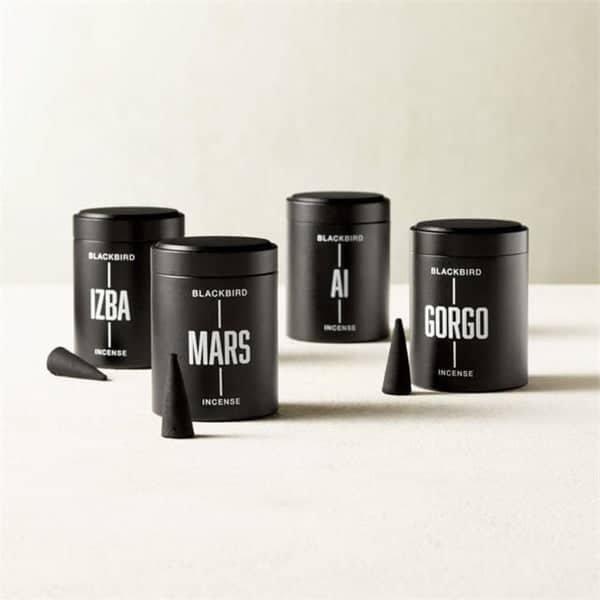
As we all know, black has not been a popular color in packaging applications since ancient times; when it comes to black, people usually remind of death, pressure, bad news, and dark. But things get different at present; it is quite natural if someone claims he loves black. Moreover, many designers noticed the metallic color could be well displayed on a black base. That makes a great difference in the color choice of packaging. And If you like gothic style, you will also appreciate it.
Whether a candle shop or a candle brand, candles in black packaging easily stand out among the colorful packaging. This is also the advantage of black packaging. When people are drawn to it, they are more likely to buy the one in black packaging.
Furthermore, because of its round shape and lack of sides and angles, it is easy to prevent dirt from being lodged in any of these corners, both in the container itself and its enclosure. One of the most important points of the Black paper candle tubes is their ease of handling. The cylindrical containers are easy to hold since human hands are naturally prepared to perform this gesture. On the other hand, the hand must make an effort to hold square packages.
Kraft paper candle tube

If you are looking for cardboard candle packaging instead of plastic jars, kraft paper candle tube packaging as candle holders is a great option. Raft cardboard cylinder tubes are also popularly used as t-shirt packaging and coffee and tea storage containers; they are also a good option for candle packaging. These cardboard cylinder tubes are made with durable cardboard from sturdy kraft paper, with a 2mm thickness indestructible wall that can be resistant to crushing and won’t go out of shape to keep your product safe packed inside and can be used as shipping or mailing tube boxes, they are capable of protecting the goods inside during shipment. Kraft paper candle tube packaging is considered some of the most environmentally friendly candle packaging, following how they are made. The production process of the cardboard tube utilizes recycled Kraft paper as the main raw material. This makes it environment-friendly when used for candle packaging and very popular at the same time because of the natural Kraft stylish look.
And here is one more thing you need to pay attention to, their prices may vary depending on the nature of the paper that has been used and the printing and finish applied on the cardboard tube boxes. Plain Kraft tubes are the cheapest choice; you can choose to buy plain Kraft tubes to pack your handmade candles with printed stickers. The candle tube packaging surface paper can be brown or white laminated with artwork printing.
The printed cardboard candle tube
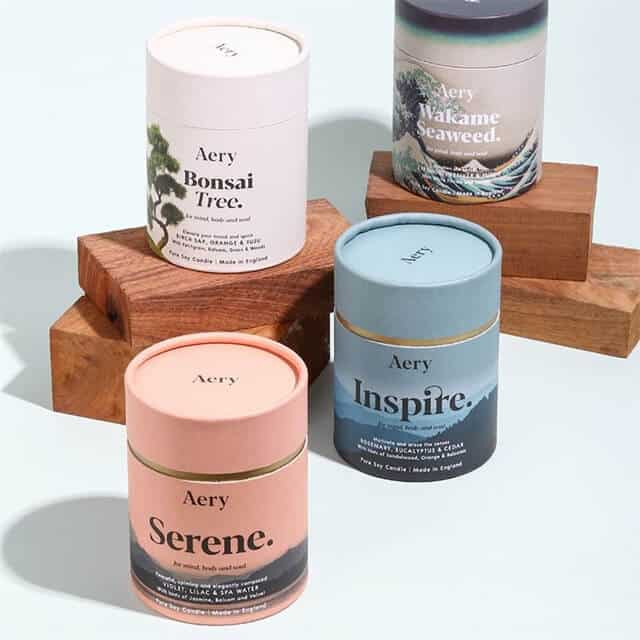
Since this kind of candle tube packaging is made of cardboard, which is easy to print, it can well meet the needs of various brand design patterns and logos. We all know that different brands and even different products have different requirements for the appearance of product packaging. The patterns on the packaging largely reflect a brand’s story and convey the concept of design. Another important point is that cardboard is a 100% recyclable material, which is definitely an excellent means to attract potential customers when people in various regions pay more and more attention to environmental protection today, plus The cost of cardboard is very low, which has played a great role in saving costs for packaging.
In addition, the shape of this packaging design is generally cylindrical, which is also their advantage. The cylindrical shape is more suitable for candles than other rectangular cartons. In addition, according to the needs of the product, we can even add a handle to the lid of the packaging so that consumers can save some effort when opening the lid. In addition, This design can also increase the aesthetic feeling of the whole packaging to a certain extent. And a beautifully packaged candle will definitely attract the attention of consumers when they go to the store to buy candles and increase sales. Therefore, it is very important for candle manufacturers to choose the right candle packaging box. They are very flexible in nature and can be customized to suit different finish styles. Considering that candles are a special type of product, coupled with the volume and the capacity of candles. The advantages of cylindrical containers in terms of capacity are reflected.
Conclusion
No matter what material the candle tube is made of, the product’s characteristics will be brought into full play through customization. And how the candle tube packaging ends up can vary depending on what the customer wants to see.
Containers are much more critical than simple matter containers. Containers serve multiple functions, where their composition, shape, and even method of manufacture become essential. In addition, these aspects have certain features, advantages, disadvantages, etc. Therefore, good packaging does not have to be in harmony with the product. In other words, it must adequately serve the purpose for which it was designed and manufactured. For this, the most suitable packaging must be selected for each product.
At PackFancy, we are responsible for customizing the packaging for your products, such as adding screw caps to your packaging to increase the stability of your products and manufacturing and printing more suitable colors for your products.


