

For mobile phone brands, packaging matters a great deal. A phone box is essentially the product’s “physical business card.” Premium brands are willing to invest heavily in materials, structure, and craftsmanship because packaging directly affects whether they can justify a higher price. In contrast, brands that focus on maximum value for money often simplify their packaging—this “minimalism” itself signals that the cost is being spent on the product rather than the box.
1. Why phone packaging matters?
#1. Setting the tone for the unboxing experience
Packaging is the user’s first physical interaction with the product. From the resistance when peeling off the seal, to the slow lift of the lid, to the arrangement of the phone and accessories—every detail subtly defines the product’s perceived quality. Apple, for example, uses minimalist packaging to convey precision and restraint, while some other brands create a more ceremonial unboxing experience to communicate luxury and exclusivity.
#2. Communicating brand identity and environmental values
Packaging is an extension of a brand’s visual identity. Some brands use bold colors and trendy designs to appeal to younger audiences, while Apple’s removal of plastic wrap in favor of tearable paper seals quietly communicates its commitment to sustainability and carbon neutrality.
#3. Impacting logistics and product safety
During shipping, packaging strength directly determines how well products survive transit. At the same time, sealing methods, anti-counterfeit labels, and tamper-evident designs help distributors distinguish between brand-new units and resealed ones—playing a crucial role in maintaining pricing stability across sales channels.
#4. Creating marketing impact and shareability
Packaging also acts as a form of social currency. When users film and share unboxing videos, they’re essentially providing free marketing. A distinctive box design can stand out on shelves and help drive sales without a single word.


2. The evolution of phone packaging
Although the “box” remains the dominant format, phone packaging has gone through several stages:
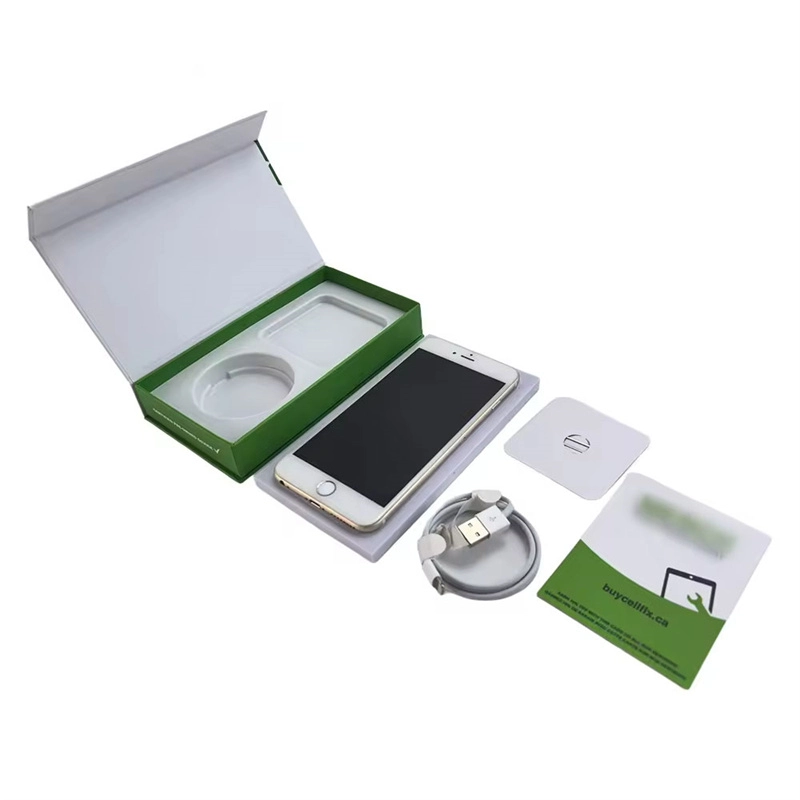
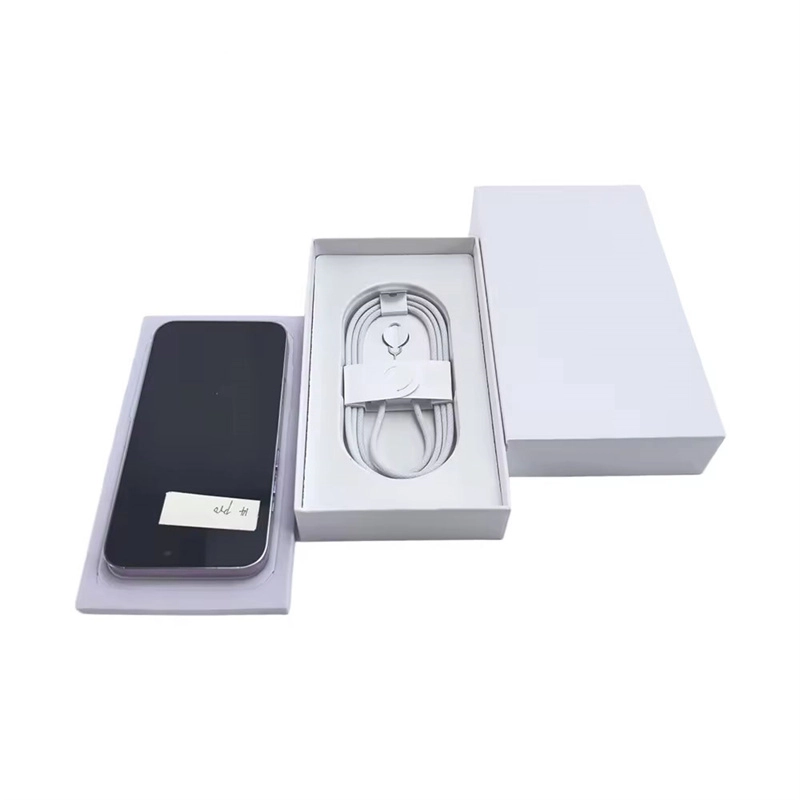
Classic rectangular boxes (mainstream today)
Most phones use this format, typically in two styles:
- Book-style (flip lid): Often used for flagship models, offering a more ceremonial opening and better protection.
- Two-piece lid-and-base (lift-off lid): The most common solution today, balancing cost, structure, and user experience.
Unconventional designs (experimental phases)
At certain times, brands experimented with unique packaging for marketing or environmental reasons. Early designs from brands like HTC included cylindrical or prism-shaped boxes—highly distinctive but inefficient. More recently, companies like Apple have removed plastic wrap and simplified internal structures, maintaining the box format but reducing complexity.
Special-category packaging
Foldable phones, being thicker and more expensive, often come in wider, flatter boxes with more sophisticated internal layouts. Meanwhile, entry-level or carrier-bundled devices sometimes use hanging blister packs for easier retail display.
Overall, packaging is becoming increasingly polarized: premium devices use refined materials and structures to support higher pricing, while mid- and low-end models simplify packaging—or even explore packaging-free approaches—to reduce costs and meet sustainability goals.
3. Key considerations in phone packaging design
Designing a phone box requires balancing five factors: brand expression, user experience, cost control, environmental responsibility, and logistics.
#1. Brand positioning and visual identity
Packaging must align with the product’s price and positioning.
- Premium phones often use rigid materials, soft linings, and finishes like foil stamping or UV printing to create a sense of value.
- Budget models typically use lighter materials and rely on bold colors or logos to convey affordability or a youthful image.
Strong visual identity is essential—ideally, users should recognize the brand from color and texture alone.
#2. The “first three seconds” of unboxing
The unboxing experience is carefully designed to impress.
- The resistance of the lid must feel just right—not too loose, not too tight.
- When opened, the phone should sit perfectly centered, with a clean, fingerprint-free screen.
- Accessories should be arranged in a logical sequence to guide the user naturally.
#3. Logistics and channel compatibility
The box must protect the device through rigorous drop and vibration tests.
Tamper-evident seals and anti-counterfeit features are also critical for distinguishing new products from resealed ones and maintaining channel trust.
#4. Cost and supply chain efficiency
Even small changes in box dimensions can significantly impact shipping efficiency. For example, reducing box size can greatly increase the number of units per shipment.
Additionally, overly complex designs may reduce compatibility with automated production lines, increasing labor costs.
#5. Environmental regulations and responsibility
Global markets—especially in Europe—are imposing stricter sustainability requirements.
- Plastic reduction is key, with many brands switching to molded paper pulp and paper seals.
- Packaging must be recyclable, avoiding mixed materials that are difficult to separate.
A well-designed phone box strikes a balance between shelf appeal, unboxing experience, product protection, storage efficiency, and environmental compliance.

4. Representative brand approaches
Different brands prioritize different aspects of packaging, reflecting their strategies and cost structures.
Apple: the benchmark for efficiency and sustainability
Apple’s packaging philosophy is all about simplification.
- Structure: Highly precise two-piece boxes with tight tolerances and smooth, gravity-assisted lid movement.
- Materials: Extensive use of molded paper pulp, eliminating plastic components.
- Design: Minimalist white packaging with only the product image and logo—no technical specs.
- Strategy: Reduce packaging size, cut logistics costs, reinforce sustainability leadership, and maintain strong brand recognition.
Samsung (and other Android flagships): information-driven design
Samsung’s packaging focuses more on communication and completeness.
- Structure: Slightly larger boxes to accommodate accessories.
- Design: Key features and specifications are printed on the box, helping customers understand the product without opening it.
- Materials: Matte finishes with premium touches like foil stamping for higher-end models.
- Strategy: Support complex sales channels with clear information and cater to diverse global user expectations.
Overall, Apple emphasizes brand consistency and operational efficiency, while Samsung and other manufacturers focus more on channel usability and information transparency. These differences ultimately reflect variations in brand positioning, distribution strategies, and target audiences.


