In the realm of business, thank you cards are a simple yet powerful tool for enhancing customer relationships, boosting brand loyalty, and creating memorable experiences. While the content of these cards is crucial, the size also plays a significant role in how they are perceived and handled by recipients. This article delves into the various sizes of thank you cards, providing recommendations for different business scenarios to help you make an informed decision.
1. Standard Thank You Card Sizes
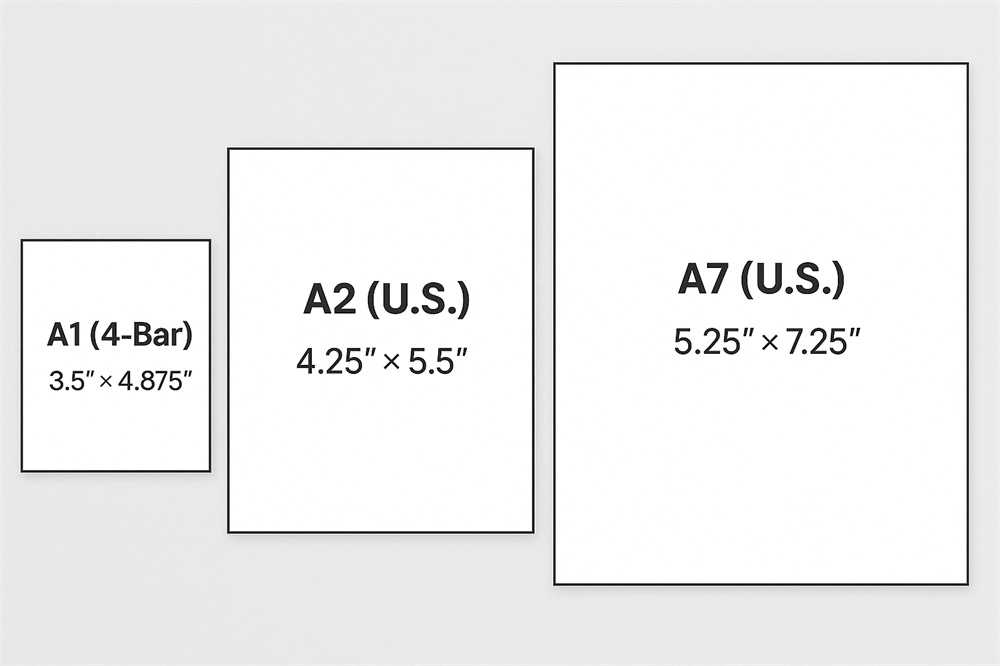
Common Dimensions
- 3.5 x 5 inches
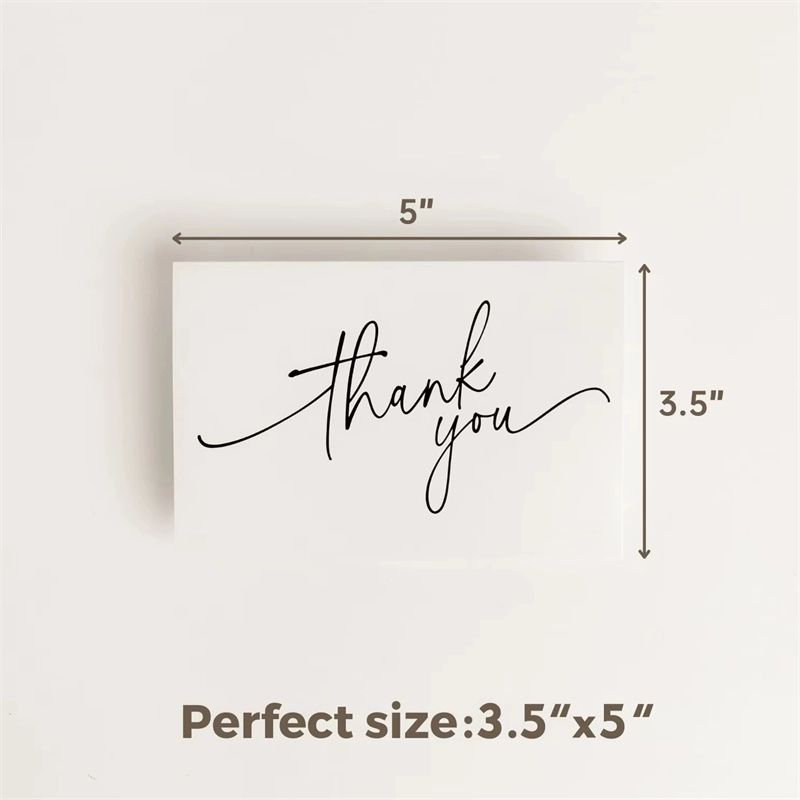
The 3.5 x 5 inches card, also known as the 4-bar or A1 size (U.S. “A” stationery sizes), is a compact and traditional choice for thank you cards.
This size is ideal for short, personal notes and fits easily into small envelopes, making it a popular option for many businesses.
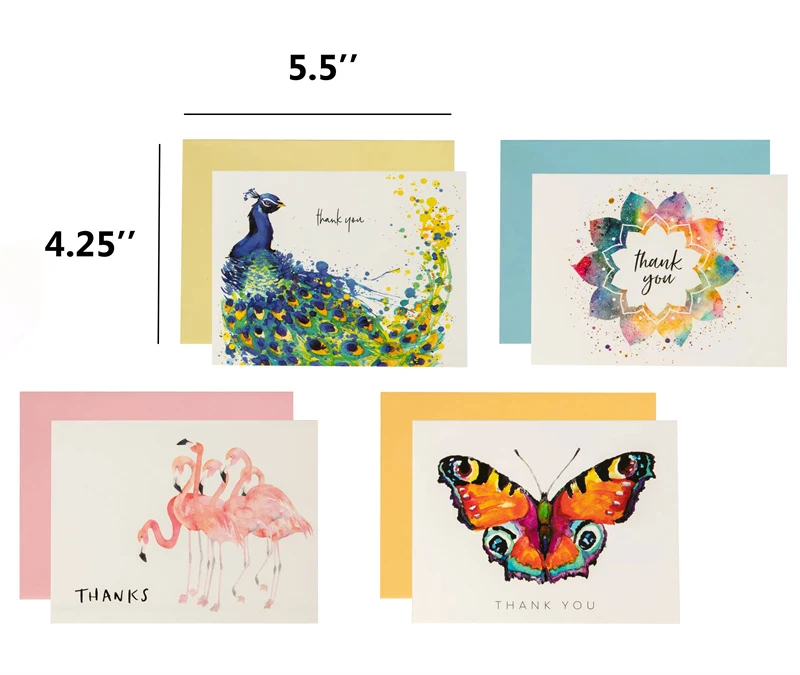
- 4.25 x 5.5 inches
The 4.25 x 5.5 inches card, or A2 size, offers a bit more space than the A1 size.
This makes it suitable for more detailed messages while still maintaining a convenient, manageable size.
It’s perfect for businesses that want to include a bit more information or imagery in their thank you notes.
- 5 x 7 inches
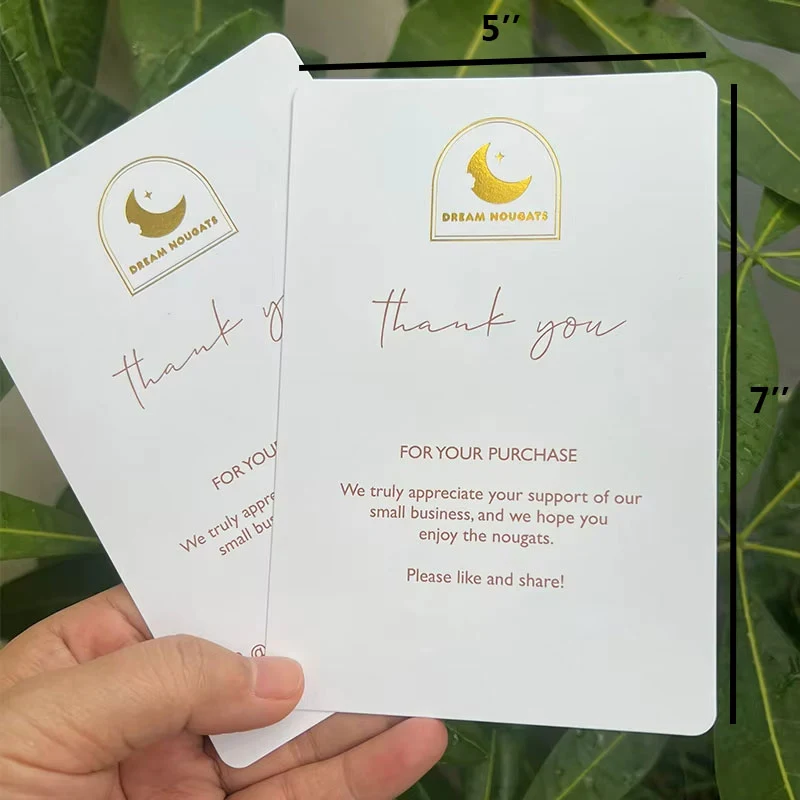
The 5 x 7 inches card, or A7 size, is the most spacious of the standard options.
This size provides ample room for a detailed message, larger images, or additional branding elements.
It’s an excellent choice for businesses that want their thank you cards to make a strong visual impact.
PS. In the above content, the A1, A2, and A7 sizes refer to the U.S. “A” stationery sizing system. For your reference, here is a table outlining the U.S. “A” stationery sizes.
| U.S. “A” Size | Envelope Size (inches) | Typical Card Size (inches) | Common Uses |
|---|---|---|---|
| A1 (4-Bar) | 3 5/8 × 5 1/8 | 3 1/2 × 4 7/8 | Thank-you cards, RSVP cards |
| A2 | 4 3/8 × 5 3/4 | 4 1/4 × 5 1/2 | Invitations, holiday cards |
| A6 | 4 3/4 × 6 1/2 | 4 1/2 × 6 1/4 | Announcements, invitations |
| A7 | 5 1/4 × 7 1/4 | 5 × 7 | Standard greeting cards |
| A8 | 5 1/2 × 8 1/8 | 5 1/4 × 7 7/8 | Invitations, oversized cards |
| A9 | 5 3/4 × 8 3/4 | 5 1/2 × 8 1/2 | Formal invitations |
| A10 | 6 × 9 1/2 | 5 3/4 × 9 1/4 | Large announcements |
Advantages of Standard Sizes
- Availability of Envelopes
One of the primary advantages of using standard thank you card sizes is the easy availability of matching envelopes. Standard sizes are widely produced and stocked, making it simple to find envelopes that fit perfectly, ensuring a professional presentation.
- Easier to Design and Print
Designing and printing thank you cards in standard sizes is generally more straightforward. Most design software and printing services are optimized for these sizes, which can streamline the production process and reduce potential issues.
- Cost-Effectiveness
Standard-sized cards are often more cost-effective to produce. Since they are commonly used, printing companies can offer competitive rates due to economies of scale. This makes them a budget-friendly option for businesses of all sizes.
Custom Thank You Card Sizes

Importance of Customization
- Tailoring to Specific Business Needs
Custom-sized thank you cards allow businesses to tailor their cards to meet specific needs. Whether it’s a unique product launch, a special event, or a targeted marketing campaign, custom sizes can be designed to align perfectly with your objectives.
- Creating a Unique Brand Image
Using custom sizes helps your business stand out. A unique card size can enhance your brand image, making your thank you notes more memorable to customers. This differentiation can reinforce your brand identity and leave a lasting impression.
Popular Custom Sizes
- 4 x 9 inches (Slim Cards)
Slim cards, typically measuring 4 x 9 inches, offer a sleek and modern look. These cards are ideal for elegant and minimalist designs, providing a distinctive format that catches the eye without overwhelming the recipient.
- Square Cards (Various Dimensions)
Square cards come in various dimensions, such as 4 x 4 inches or 6 x 6 inches. These cards offer a contemporary and unique shape that stands out from traditional rectangular cards. They provide ample space for creative designs and branding elements.
Considerations for Custom Sizes
- Printing and Envelope Compatibility
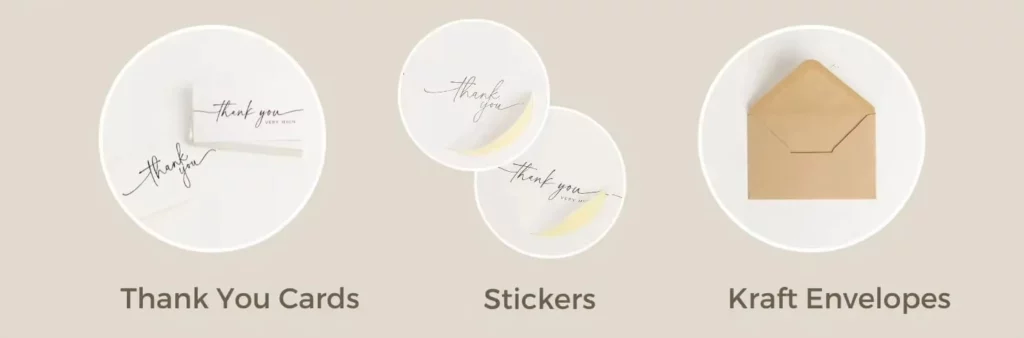
When choosing custom sizes, it’s crucial to ensure that your selected dimensions are compatible with printing capabilities and envelope availability. Custom sizes may require special printing processes and custom-made envelopes, which can affect both cost and production time.
- Design Flexibility
Custom sizes offer greater design flexibility, allowing you to create unique layouts and incorporate specific design elements that may not fit within standard dimensions. However, this flexibility requires careful planning to ensure that the final product is visually appealing and functional.
2. Choosing the Right Size for Your Business
Understanding Your Audience
- Personal Preferences
Understanding the personal preferences of your audience is crucial when selecting the size of your thank you cards. Consider factors such as what types of designs and formats resonate with them. Do they prefer minimalistic designs or more elaborate ones? Personalizing your thank you cards based on these preferences can significantly enhance their impact.
- Demographics and Psychographics
Demographic and psychographic information about your audience can provide valuable insights. For example, younger audiences might appreciate modern, sleek designs in non-traditional sizes, while older demographics might prefer classic, standard sizes. Psychographics, which include interests, values, and lifestyles, can also inform your design choices and card sizes.
Matching Card Size to Business Type
- Retail and E-commerce
For retail and e-commerce businesses, smaller thank you cards (such as 3.5 x 5 inches or 4.25 x 5.5 inches) are often ideal. These sizes are easy to include in packaging and provide a personal touch without overwhelming the customer. They are also cost-effective and convenient to produce in large quantities.
- Service-Based Businesses
Service-based businesses might benefit from medium-sized cards (such as 4.25 x 5.5 inches or 5 x 7 inches). These sizes offer more space for a detailed message and can include promotional offers or detailed thank you notes that explain the value of the services provided.
- Corporate and B2B Relationships
For corporate and B2B relationships, larger cards (such as 5 x 7 inches) are often more appropriate. These cards can convey a sense of professionalism and importance, providing ample space for personalized messages, corporate branding, and additional content such as event invitations or business updates.
Budget Considerations
- Cost of Production
The cost of production is a significant factor when choosing the size of your thank you cards. Standard sizes are typically more economical due to their widespread use and availability. Custom sizes may incur higher design, printing, and material costs, but they can offer a unique touch that justifies the investment.
- Impact on Postage Fees
Larger and heavier thank you cards can increase postage costs. When planning your budget, consider the long-term impact of mailing expenses. Standard-sized cards are often more affordable to mail, while custom sizes may require additional postage due to non-standard dimensions or weights.
3. Designing Your Thank You Card
Design Elements to Consider
- Layout and Spacing

Effective thank you card design starts with a well-thought-out layout.
Ensure there is adequate white space to avoid a cluttered look.
Proper spacing can enhance readability and make the card more visually appealing.
- Typography and Readability

Choose fonts that are easy to read and align with your brand’s personality.
The typography should complement the overall design without overpowering the message.
Ensure that the font size is appropriate for the card size to maintain clarity and legibility.
- Use of Images and Logos

Incorporating images and logos can enhance the visual appeal of your thank you cards.
Ensure that these elements are high-quality and strategically placed to support the message rather than distract from it.
The size of the card should allow for a balanced inclusion of text and images.
Printing Options
- Digital vs. Offset Printing
Decide between digital and offset printing based on your budget and the quantity of cards needed. Digital printing is cost-effective for small batches and allows for quick turnaround times. Offset printing, while more expensive for small quantities, offers superior quality and is cost-effective for larger runs.
- Paper Quality and Finishes
Select high-quality paper and finishes to enhance the look and feel of your thank you cards. Options such as matte, glossy, or textured finishes can add a premium touch. Consider environmentally friendly options as well, which can appeal to eco-conscious customers and enhance your brand’s reputation.
4. Case Studies
Examples of Successful Thank You Card Campaigns
- Retail Brand Example:
A boutique clothing store used 4.25 x 5.5-inch cards with vibrant designs and personalized messages. This size was perfect for inclusion in their packaging, creating a delightful unboxing experience.
- Service-Based Company Example:
A local spa chose 5 x 7-inch cards to thank clients for their patronage. The larger size allowed for detailed messages and promotional offers, enhancing customer retention.
- Corporate Thank You Card Example:
A B2B software company used 5 x 7-inch cards with a professional design, including the company’s logo and a personalized note from the CEO. This approach reinforced the company’s commitment to building strong professional relationships.
FAQ of Thank You Card Size
Q1. What size is a thank you card A4?
Normally, when referring to thank-you card sizes, we use the U.S. “A” stationery system. In this system, there is no A4 size. However, in the ISO 216 paper size system (used internationally), there is an A4 size: A4 (ISO) — 8.27 × 11.69 inches (210 × 297 mm), which is the standard office paper size.
Q2. What size is an A5 thank you card?
Normally, when referring to thank-you card sizes, we use the U.S. “A” stationery system. In this system, there is no A5 size. However, in the ISO 216 paper size system (used internationally), there is an A5 size: A5 (ISO) — 5.83 × 8.27 inches (148 × 210 mm), which is commonly used for flyers, small booklets, and notepads.
Q3. Are thank-you cards usually portrait or landscape?
Both orientations are used, but portrait (vertical) is slightly more common for formal thank-you cards.
Q4. What size envelope do I need for a thank-you card?
The envelope size should allow for a comfortable fit, with a small margin so the card can slide in easily without bending.
For example:
A1 (4-Bar) card size: 3.5 × 4.875 inches
A1 (4-Bar) envelope size: 3.625 × 5.125 inches